
The Moon’s journey through the sky is like a slow, silent dance, one that many spiritual traditions find deeply meaningful. Think of yourself looking up at the night sky each week: you see a slim crescent, then a brighter half-moon, then a glowing full moon, and finally a waning silver. Many people sense an unspoken guide in these shifts.
As one writer puts it, “The moon doesn’t consider one phase better than another; she just glows, equally stunning at each turn”. In other words, every moon phase has its own special beauty and lesson. In this article we’ll explore the moon phases spiritual meaning, from new moon beginnings to full moon celebrations and beyond, and even peek at how ancient scriptures touch on lunar symbolism.
The lunar cycle naturally mirrors our inner rhythms. Each moon phase carries its own energy, from quiet intent on a new moon to release at the waning crescent, offering gentle guidance for personal growth and reflection.
Moon Phases Spiritual Meaning in the Bible:
How does the Bible view the Moon’s changing shape? Scripture often uses lunar imagery symbolically, though it mostly speaks of the Moon as part of creation, not an object of worship. For instance, Genesis describes how God made “two great lights…the greater light to rule the day and the lesser light to govern the night”. This establishes the Moon’s role in marking time and seasons. In Psalm 104:19, it says God made the moon to “mark the seasons” (NIV). The Moon’s steady reliability was even likened to God’s faithfulness: “It will be established forever like the moon, the faithful witness in the sky.” (Psalm 89:37).
At the same time, Deuteronomy warns, “When you look up to the sky and see…the moon…do not be enticed into bowing down to them” (Deut. 4:19). The point is that the Moon is a created light, not the Creator itself. (As one Biblical author notes, the Moon borrows its glow from the sun, just as we reflect divine light.)
Full moons and new moons had special places in Hebrew tradition. The new moon signaled the start of a month and special offerings, much like turning a page on the calendar. A full moon often coincided with festivals (Psalm 81:3 mentions celebration when the moon is full). Also, prophetic passages use moon imagery for dramatic events: “The sun shall be turned to darkness, and the moon to blood” appears in Joel 2:31 and Revelation 6:12, symbolizing great upheaval. These verses liken a red moon to the idea of monumental change.
In summary, the Bible sees the moon’s cycle as orderly and meaningful (part of God’s design), a “faithful witness” in the sky. Its phases remind believers of change and continuity. However, Scripture emphasizes that any light we see, celestial or otherwise, is meant to reflect God, not be worshiped on its own.
The Moon’s Symbolic Role in Our Lives:
Across cultures and history, the Moon has been revered as a symbol of change, intuition, and the divine feminine. In ancient Greek myth, the Moon was Selene, a goddess who rode a horse-drawn chariot across the night sky. The Romans called her Luna. In Norse tradition the moon is personified by the god Máni, and in Hindu lore by Chandra. Many indigenous and Earth-centered faiths view the Moon as a goddess or spirit.
For example, modern Pagan and Wiccan traditions honor the Moon as the Triple Goddess, with the waxing phase as the Maiden (youth and new beginnings), the full moon as the Mother (fertility and power), and the waning phase as the Crone (wisdom and endings).
This rich tapestry of imagery highlights one central spiritual idea: the Moon is a mirror for our own cycles. Just as the moon waxes and wanes in the sky, our lives naturally expand and contract. By watching the Moon, people say we can better understand the rhythms of our mind and spirit. For instance, when the Moon grows toward full we might feel motivation and clarity, but when it shrinks toward new we might feel introspective and in need of rest. Many who sense a “moon spirit” describe it as a calm, nurturing presence: an inner guide encouraging intuition and creativity.
“Let the waters settle and you will see the moon and the stars mirrored in your being,” wrote the poet Rumi. This kind of wisdom, seeing our reflection in the Moon, can make each phase feel personally meaningful. Rather than viewing some phases as “better” than others, we can learn from each one. The Moon’s quiet, regular cycle reminds us that change is natural, and that each ending leads to a new beginning.
The Lunar Cycle: Your Spiritual Journey
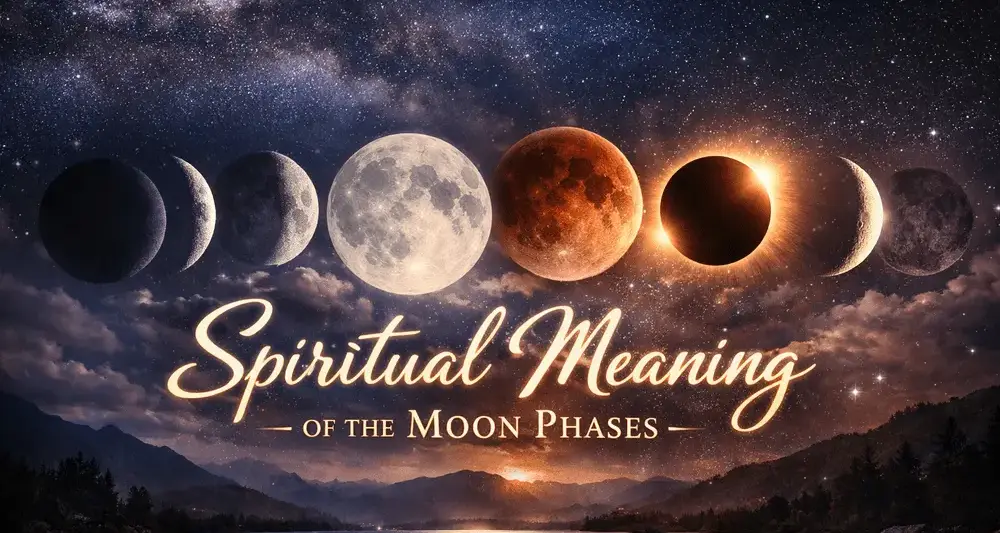
Each lunar cycle takes about 29½ days to complete. It begins with the New Moon, moves through waxing phases to the Full Moon, then wanes back to the next New Moon. As the Moon transitions, many feel subtle shifts in energy or mood. By paying attention, we can align our intentions and actions with this celestial rhythm.
- New Moon: Silent beginnings. At New Moon, the sky is darkest. This stage symbolizes a blank slate or seed point. It’s a time to set intentions or plant dreams. (Biblically, a new moon marked a fresh month; ancient Israelites offered sacrifices at the new moon to mark new beginnings.)
- Waxing Moon: Building momentum. As the Moon grows (waxing crescent to first quarter and then to waxing gibbous), energy rises. This phase encourages growth and action. It’s ideal for taking steps toward your goals and “fanning the flames” of what you set in motion.
- Full Moon: Fruition and illumination. When the Moon is fully lit, hidden things become clear. Emotions and intuition peak, and projects often reach a climax. The full moon is associated with abundance, celebration, or the need to release what no longer serves.
- Waning Moon: Release and rest. After full, the moonlight diminishes. The Waning phases (waning gibbous, last quarter amd waning crescent) are a period of letting go. This is a natural time for reflection, gratitude, and preparation. By waning crescent, the Moon reminds us to release old baggage, make space, and rest before the next new cycle.
This journey is cyclical and renewing. Many people note, for example, that a waning crescent often brings a sense of surrender: “This phase of the moon’s cycle is a reminder that only by letting go of limiting perspectives, thoughts, and stories will you be able to create the space for what your spirit is here to do,” writes spiritual teacher Kalia Kelmenson. Meanwhile, the waxing crescent can feel hopeful and driven: it’s the moment when we watch that thin sliver of light grow, reminding us to nourish our intentions.
Here’s a quick summary table of the major phases and themes:
| Moon Phase | Symbolic Energy | Key Focus / Practice |
| New Moon | New beginnings, quiet potential | Set intentions, reflect quietly |
| Waxing Moon | Growth, motivation, building | Take action on goals, journal |
| Full Moon | Illumination, celebration, release | Celebrate progress; release fears |
| Waning Moon | Release, gratitude, rest | Let go, introspect, recharge |
New Moon Spiritual Meaning:
The New Moon is the most subtle of phases, but spiritually it feels rich with possibility. In many traditions it’s seen as the cosmic cue to start anew. You might gaze at a pitch-black sky and think of your own life’s blank page: what would you like to begin? Setting intentions at a new moon is a common practice. Many write down goals or say affirmations quietly, trusting that their wishes have a special time to be born. Because the sky is dark, this phase is also about turning inward. It’s a moment for rest, meditation, and visioning.
Even the Bible hints at this symbolism. Ancient Hebrew law defined months by new moons; each new moon was a fresh start marked by offerings to God (Numbers 28:11). This suggests the new moon was seen as an auspicious opening of a chapter. In modern terms, think of the New Moon as your chance to “plant seeds” – whether they be seeds of an idea, a project, or a personal intention. Quiet activities work well now: journaling, dreamwork, meditation, or simply making a list of hopes for the coming weeks.
Practical Tip: Try lighting a candle on the new moon night, and spend a few minutes writing down 2–3 things you want to nurture in the next month. Keep them posted in your journal and revisit at Full Moon.
Waxing Moon Spiritual Meaning:
As the moon waxes, or grows fuller, it brings a sense of building energy and purpose. After a new moon’s stillness, you may find motivation stirring inside. The Waxing Crescent (a thin sliver growing to first quarter) is about amplifying your intent. You might catch yourself thinking more about the goals you set, or taking small steps toward them. Kalia Kelmenson notes that during the waxing crescent, it’s ideal to “fan the flames” of what you imagined at the new moon. In practice, this could look like repeating affirmations, adjusting plans, or visualizing success as the moon brightens night by night.
Moving into the First Quarter and Waxing Gibbous phases, the light keeps increasing. Spiritually, this is a period of action and momentum. You might feel more confident and energetic now. This is a good time for work, creativity, or putting ideas into motion. Observe how your energy level climbs: it’s as if the universe is giving you a green light. Some people perform small rituals (like planting real seeds or starting a creative project) at this stage, symbolizing the concrete steps of growth.
“Watch the tiny sliver of light grow each evening during this phase,” advises Kelmenson, “imagining that what you are bringing into the world… is growing as well.” The waxing moon encourages us to stay focused on our intentions, feeding them with effort and faith.
Practical Tip: Keep a goal tracker or sketch out a plan as the moon waxes. Revisit your affirmations or mantra daily under the growing moonlight, reminding yourself of the direction you’re headed.
Full Moon Spiritual Meaning:
The Full Moon is the climax of the lunar cycle – a brilliant circle of light in the sky. Spiritually, a full moon is often seen as a time of illumination, celebration, and release. When the Moon is full, hidden things can become visible. Emotions, intuitions, and outcomes often feel magnified. You may find yourself having insights or heightened sensitivity to energy.
Many people feel the full moon’s influence as a peak in personal energy. It’s a classic night for gatherings, dances, or rituals. Culturally, people have held feasts or festivals at full moons (the Bible’s Psalm 81:3 even alludes to celebratory feasts at full moon). On a practical level, this phase can be ideal for closing tasks and reflecting on progress. It’s also traditionally associated with releasing what no longer serves you: writing down fears to burn, or letting go of grudges. Imagine the full moon as a powerful spotlight, it illuminates truth, and what is revealed can then be addressed.
Folk wisdom has even named each year’s full moons according to seasons: for example, January’s Wolf Moon (so-called because wolves howled in winter), April’s Pink Moon (for the early spring flowers), and July’s Buck Moon (when male deer grow antlers). These names remind us that the full moon often connects to nature’s cycles and our own states of being.
Practical Tip: On a full moon night, try a simple release ritual. Write on paper something you wish to let go (fear, a bad habit, etc.), and safely burn or bury it under the moonlight. Also, stand outside or by a window and soak in the moonlight for a few minutes, breathing deeply to center yourself.
Blood Moon and Eclipse Spiritual Meanings:
Occasionally the lunar cycle brings dramatic spectacles: lunar and solar eclipses. A Blood Moon is a total lunar eclipse, when the Earth’s shadow covers the Moon, often giving it a red or copper glow. Spiritually, eclipses are seen as super-charged moon phases. A solar eclipse (when the Moon briefly blocks the Sun) is especially potent because it superimposes new-moon energy onto a day.
A solar eclipse interrupts the normal flow of light, symbolizing a sudden shift or radical new beginning. According to astrologers, an eclipse of the Sun accelerates change. It amplifies new moon energy, calling for inner focus and a shake-up of old patterns. The blockage of light can bring hidden issues to the surface. In practical terms, an eclipse is often taken as a cue: pause, reflect on what you really want, and be ready to embrace unexpected turns. After an eclipse, it’s wise to wait a few weeks before starting anything major, as the energy can be unpredictable.
A lunar eclipse (including the “Blood Moon”) intensifies the Full Moon’s themes. Everything of the full moon, illumination, emotions, endings, is magnified. Many see a lunar eclipse as marking the final act of a cycle: “many astrologers interpret a lunar eclipse as the final ending to a particular chapter in our lives”. In other words, it feels like a point-of-no-return, after which something new is certain to begin. One guide notes that a Blood Moon brings “endings, deep transformation, and rebirth”. It’s an invitation to shed what’s outlived its purpose and to step into change, even if the process feels intense.
Here’s a quick look at eclipses and blood moons:
| Event | Spiritual Theme |
|---|---|
| Solar Eclipse | A dramatic reset of new-moon energy: introspection, sudden change, new direction. |
| Lunar Eclipse | Amplified full-moon energy: emotional release, endings of cycles, hidden truths revealed. |
| Blood Moon | Heightened transformation and release: “time of endings, deep transformation, and rebirth” |
Practical Tip: If you witness an eclipse, treat it as a special cosmic reset. You might journal about any unexpected feelings or do a short meditation during totality. Be gentle with yourself around this time, the energy is powerful and may stir up things you’ve been avoiding.
Practical Tips: Living with Lunar Energy
Whether you have a specific faith or simply love the idea of living in tune with nature, here are some earthy, practical ways to work with lunar energies:
- Keep a Moon Journal: Track your mood, dreams, and goals through a lunar cycle. Note how you feel at each phase. Over time you may see patterns: perhaps you feel motivated at waxing moons and tired at waning moons. Awareness itself can be empowering.
- Set Intentions at New Moon: Spend a few moments writing down your hopes or goals for the month under the new moon sky (or even just by candlelight). Visualize them growing.
- Perform Simple Full Moon Rituals: On a full-moon night, try a meditation or gentle yoga to soak in the high energy. Some people cleanse crystals or take a “moon bath” (sit quietly in moonlight, weather permitting). It can also be a time to finish tasks—no need to force new starts, but celebrate accomplishments.
- Release on the Waning Crescent: As the moon thins, consciously let go. You might burn a piece of paper with something you’re ready to release, or take a silent walk asking for guidance on what to leave behind. The waning crescent is like a spiritual exhale before the next cycle.
- Use Symbols and Altars: If it feels right, create a simple moon altar or corner. Include items like a white candle, moonstone or selenite crystal, and a written intention. Change or refresh the items with each phase to stay mindful of the cycle.
- Listen to Your Intuition: The moon is often tied to the subconscious and emotions. Pay attention to your gut feelings, especially on intuitive nights like the full moon. Journaling or dreamwork can bring insights.
Remember, these are gentle suggestions, there’s no one “right” way. The key is the awareness and the intention behind it. By aligning small practices with the lunar cycle, you invite a touch of magic and mindfulness into daily life.
Conclusion:
The moon’s phases offer a poetic map for inner work. The calm crescent whispers of new dreams, the blazing full moon celebrates our growth, and the waning moon reminds us it’s okay to rest and release. Embracing these rhythms can bring a sense of connection to nature and to yourself. As Cristen Rodgers puts it, the Moon is “equally stunning” in every phase. Likewise, each stage of your own journey has its beauty.By observing the moon phases spiritual meaning, you tap into a time-honored guide. Whether you light a candle on a New Moon or simply pause to gaze at a harvest moon, you are participating in a cycle as old as time. Let the Moon gently guide you through growth, change, and renewal, after all, her light ultimately points us to the possibility of new beginnings.