
My student Jacob woke up early with me for the first time, just before dawn. I could tell something was different. His eyes were alert, his mind clearly elsewhere. He soon shared that he had woken from a vivid dream, his heart racing and thoughts swirling.
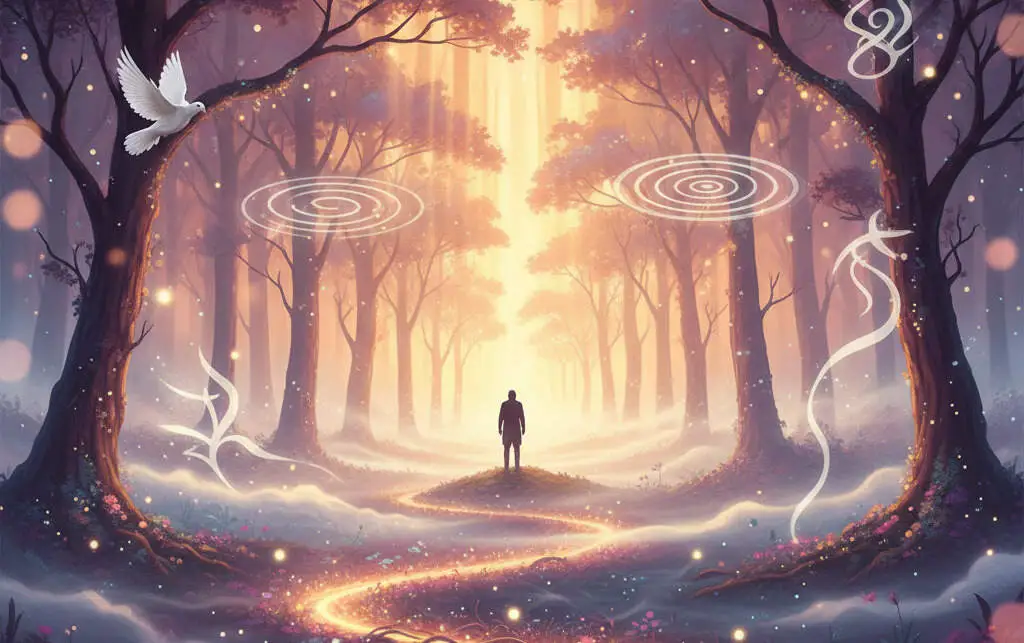
In the dream, Jacob wandered through a glowing forest, guided by a warm, gentle light that felt less like something to follow and more like an invitation. When he opened his eyes, the images didn’t fade. They stayed with him, lingering as if he had just received an important message. We often dismiss dreams as random fragments of the mind, but Jacob felt this one was different. He lay there quietly, wondering if the universe was softly trying to guide him.
Jacob hadn’t planned to analyze his dreams. Like most people, he usually forgets them by morning. But this one felt significant. Instead of rushing into the day, he stayed still and allowed the final images and emotions to settle. In that quiet moment between sleep and waking, he sensed what felt like guidance. Dreams often disappear quickly, but sometimes the universe gives us an encore, a final feeling, symbol, or image that refuses to fade. When that happens, it’s worth paying attention to spiritual meaning of dreams and visions Writing it down or simply reflecting can reveal more than we expect.
In my own experience, and through conversations with friends, I’ve seen dream symbols appear in uncanny ways. I once heard of a friend who dreamed of a white dove delivering a letter. Later that same day, she received news that answered a question she had been silently wrestling with. Stories like these remind us that dreams can intersect with waking life in subtle but meaningful ways.
Jacob’s experience is far from unique. Across cultures and throughout history, vivid dreams have been treated as sacred messages. Native American traditions often describe dreams as communications from the spirit world, while Australian Aboriginal lore speaks of “Dreamtime” as a realm where past, present, and future meet. Even psychologist Carl Jung believed that many dream symbols arise from a shared collective unconscious. Together, these perspectives suggest that dreams can serve as bridges, connecting personal intuition with a deeper, universal wisdom.
Spiritual Dreams vs. Ordinary Dreams
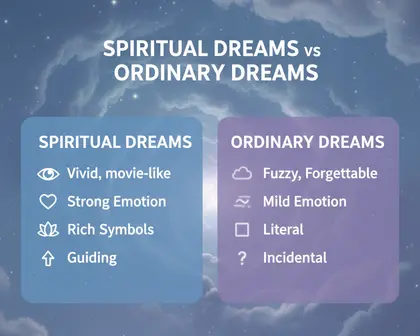
Not all dreams feel equally significant. Ordinary dreams often shuffle together daily thoughts and memories. they can be fleeting and forgettable. In contrast, spiritual dreams (sometimes called lucid, astral, or prophetic dreams) stand apart. They tend to be more vivid, emotional, and memorable.
A spiritual dream might answer a question you’ve been quietly asking or give you an insight that stays with you. We tend to forget about 95% of our dreams shortly after waking. The few that stick are usually the most vivid or meaningful. These rare dreams have even been called the 5% that “refuse to disappear,” stirring deep emotion and sometimes repeating night after night.
| Aspect | Spiritual Dreams | Ordinary Dreams |
|---|---|---|
| Recall | Vivid, movie-like (REM). | Fuzzy snapshots; quickly forgotten. |
| Emotional Impact | Strong feelings linger after waking. | Typically mild or none once awake. |
| Symbolism | Rich in personal or mystical symbols. | Often literal or tied to daily life. |
| Aftereffect | Feels meaningful or guiding. | Feels incidental, easily dismissed. |
Notice that spiritual dreams often come with a feeling. You might wake up with awe, clarity, or even urgency. Other signs include recurring dreams or the rare moment of lucidity (realizing you’re dreaming). Paying attention to these patterns can help you distinguish them.
For instance, if you repeatedly dream of flying or meeting a wise figure and it stays with you, it’s worth reflecting on as a message.

Common Dream Symbols
Many spiritual dreamers turn to symbolism for guidance. Over time, certain images gain special meaning. For example:
- Snakes: Often symbolize transformation or hidden fears. A snake shedding its skin can represent personal rebirth or healing.
- Babies: Represent new beginnings, innocence, or creative potential. Dreaming of a baby often hints at a fresh start or new project.
- Cheating (Infidelity): A dream about infidelity usually isn’t literal. It often reflects guilt, trust issues, or something out of balance in your life.
Every person’s dream language is different. The same image can mean something entirely different to someone else. For example, I dream about water when I need emotional cleansing, while another person might see it as a sign of confusion. It’s best to trust your own feelings about any symbol.
Other common symbols include:
- Flying: Often feels freeing. It may symbolize rising above challenges or gaining perspective.
- Falling: Usually feels scary. It can point to anxiety or a fear of losing control.
- Lost/Found: Losing something in a dream might reflect confusion or disconnection; finding something can symbolize clarity or resolution.
- Animals and Elements: Animals often represent instincts (e.g., a dog for loyalty). Basic elements have meanings too, dreaming of water often ties to emotions (calm water suggests peace, a stormy sea suggests turmoil), and fire might symbolize energy, passion, or transformation.
Practical Tips for Understanding Your Dreams
Catherine, another of my students, often wakes up slowly and immediately recalls vivid dreams. She keeps a notebook by her bed and spends a few quiet minutes reviewing each night’s dreams. Over time, little practices like this can improve recall. Here are some tips:
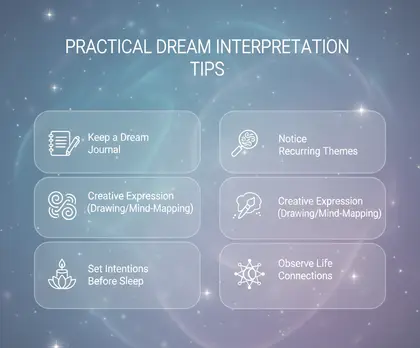
- Keep a dream journal: Write down your dreams first thing upon waking. Capturing details while they’re fresh helps reveal patterns.
- Look for themes: Notice recurring images, people, or emotions. These often highlight what your subconscious is focusing on.
- Creative expression: If words fail you, try drawing or mind-mapping a dream. Artistic expression can reveal symbols in a new way.
- Ask for insight: Spend a few quiet moments thinking about the dream, or discuss it with a friend. Sometimes simply talking it out brings clarity.
- Set intentions: Before sleep, gently ask to receive guidance or clarity in your dreams.
- Meditate on symbols: Visualize an image from your dream during meditation or prayer. A new insight may surface when your mind is calm.
- Notice connections: See if events in your day echo your dream. Life can sometimes mirror what you dreamed.
- Be patient: Don’t force an interpretation. Let the meaning unfold in its own time; trust your intuition.
Think of your dreams as subtle signs from the universe. In many intuitive and metaphysical traditions, dreams are part of our spiritual energy work, a channel through which inner wisdom communicates. By paying attention and reflecting on your dreams, you tune into your intuition and guidance.
Conclusion:
Moments like Jacob’s remind us that dreams don’t always arrive to be decoded immediately. Sometimes they come simply to awaken awareness, to nudge us toward something deeper within ourselves. The glowing forest, the gentle light, these symbols may never have a single, fixed meaning. Their value lies in how they make us feel and what they stir within our soul.
In my own life, dreams have been illuminating guides. I once dreamed of tightrope walking and later realized I was feeling stretched too thin; that dream nudged me to focus on balance. Over time, you may notice patterns or repeated symbols. Each dream then becomes a gentle teacher, guiding you toward deeper self-understanding.
Above all, trust yourself. A symbol’s meaning can vary from person to person: one dreamer’s snake might mean wisdom, while another’s could signal danger. Think of dreams as allies, not puzzles to force. Enjoy exploring your inner world, one dream at a time.